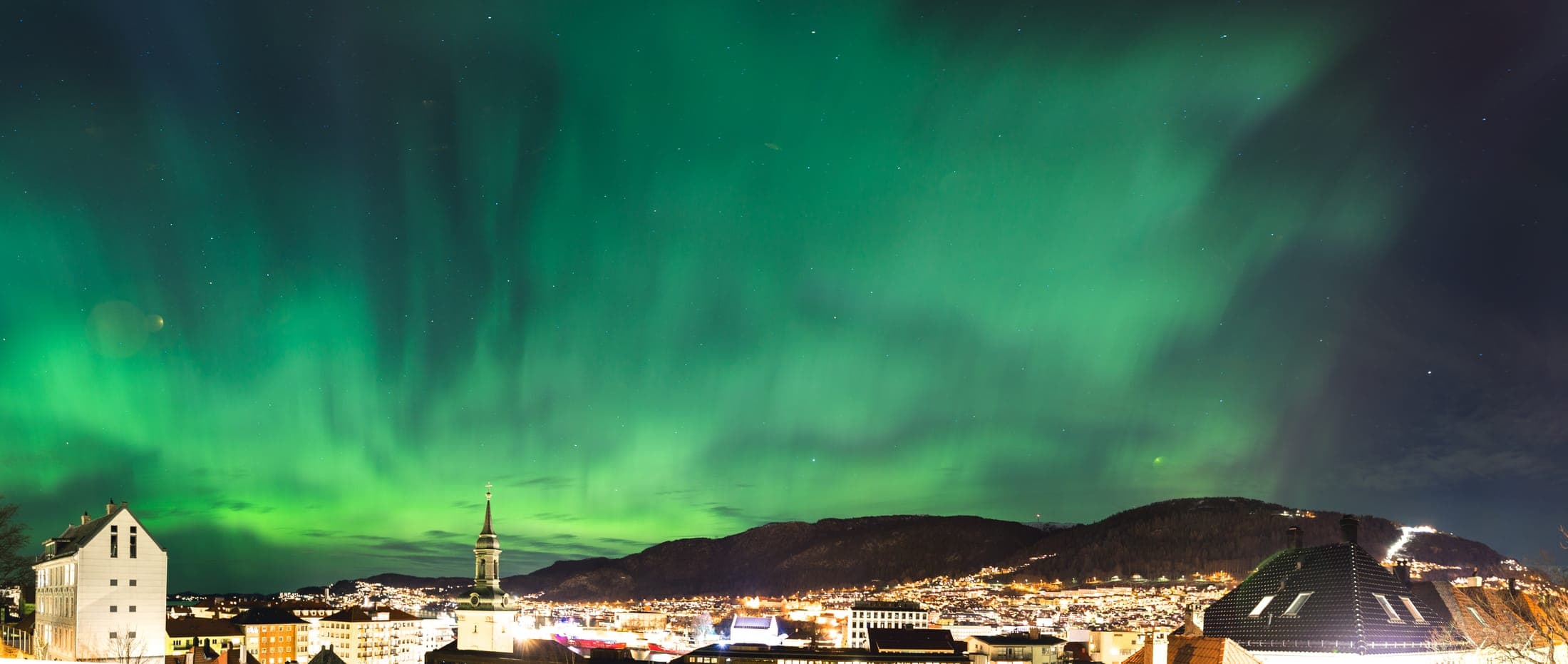
The Northern Lights (aurora borealis) are visible in Norway whenever three conditions align: darkness, clear skies, and sufficient solar activity — none of which can be guaranteed on any single night, which is why multi-night stays improve your odds meaningfully over a single overnight stop.
Season: September to March
Norway's northern regions lose enough daylight hours during this window for aurora viewing to be possible. December and January offer the longest, darkest nights, though also the coldest temperatures and shortest daylight for sightseeing during the day.
Location: Go North
Viewing odds improve significantly the further north and away from city light pollution you are. Tromsø, well above the Arctic Circle, is Norway's most popular aurora base, with organized chase tours that drive toward clear-sky pockets on any given night. The Lofoten Islands offer a similar latitude with dramatic mountain scenery as a backdrop.
Clear Skies Matter More Than Timing
Even in peak season, cloud cover on any given night can block visibility entirely. This is the main reason we recommend booking at least 3-4 nights in an aurora-viewing region rather than a single overnight stop — it meaningfully increases the chance of at least one clear night.
Combining Aurora Viewing with Fjord Touring
Most of Norway's fjord highlights (Geirangerfjord, the Flåm Railway) are best experienced in summer's long daylight hours, which is the opposite season from aurora viewing. Our Norway itineraries typically pick one focus — summer fjords or winter aurora — rather than trying to combine both on a single short trip.
What to Expect on a Chase Tour
Organized Northern Lights tours typically depart in the evening, driving to areas with the clearest forecast and least light pollution, sometimes traveling considerable distances on a given night. Warm clothing, patience, and flexible expectations are essential — sightings are never guaranteed.